Kagan's Articles - FREE Kagan Articles
Articles by Dr. Spencer Kagan
Common Instructional Practices and
Student Mental Health
To cite this article: Kagan, S. Common Instructional Practices and Student Mental Health. San Clemente, CA: Kagan Publishing. www.KaganOnline.com/free_articles/dr_spencer_kagan/common_instructional_practices_and_student_mental_health.php
Common instructional practices in schools have a negative impact on the mental health of students in two ways. They foster specific psychological symptoms and undermine general resilience and well-being. This article briefly describes these two processes and shows how cooperative learning is an antidote to both.
Specific Symptoms
There are a number of specific emotional and behavioral difficulties that are fostered by common instructional practices, but here I briefly describe only two: Fear of Public Speaking and Learned Helplessness.
Public Speaking
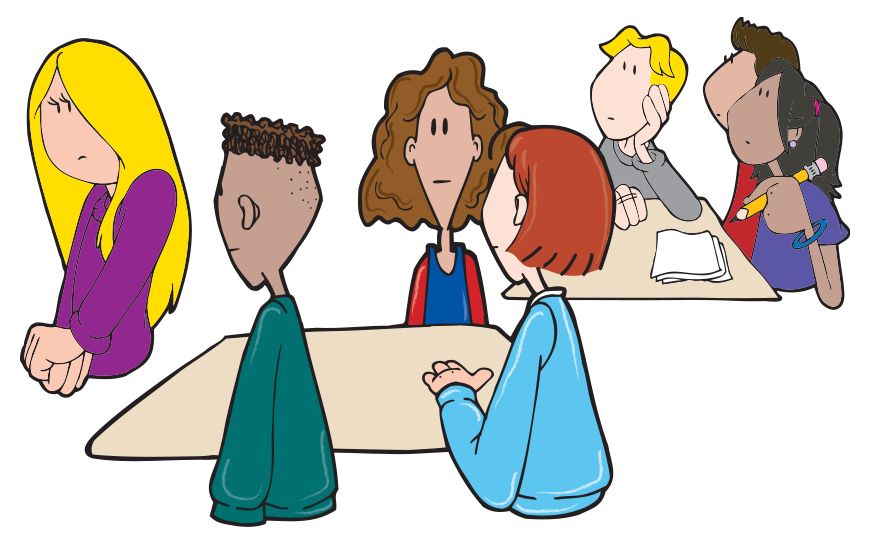
Traditional Instruction Fosters Phobia of Public Speaking (Glossophobia). Anxiety over public speaking is very common and reaches phobic intensity for many. This results from or is exacerbated by a common way teachers have students give oral reports. It is common to have students come to the front of the room and present an oral report to the class. The content of the report might be a book report, description or analysis of a current event, or presentation of the results of a student’s science experiment. If the reports are to be about three minutes long and the students are to deliver their reports one after another, with 20 students in the class, it takes an hour for a round of reports, not counting time for transitions between students and teacher’s feedback. Since a round of oral reports takes quite a bit of time, oral reports are done infrequently.
Students fear doing poorly in front of the whole class as well as in front of the teacher. Since oral reports are infrequent events, students do not have time to practice giving reports and to desensitize their fear. Consider the last students in the class to give their reports. As they wait their turn to present, those students have nearly a full hour for their anxiety to build up. Because anxiety interferes with performance, many students are likely to have difficulty giving the report. After stumbling through delivery of their report, what is a student likely to conclude? Giving oral reports creates anxiety I want to avoid. When next time the student is to give an oral report, the student has the memory of the anxiety and the difficulty associated with public speaking and brings that anxiety to the next report. This increased anxiety increases the probability of a poor performance. This second poor performance reinforces the fear of public speaking. This pattern fosters a strong fear of public speaking common among students.
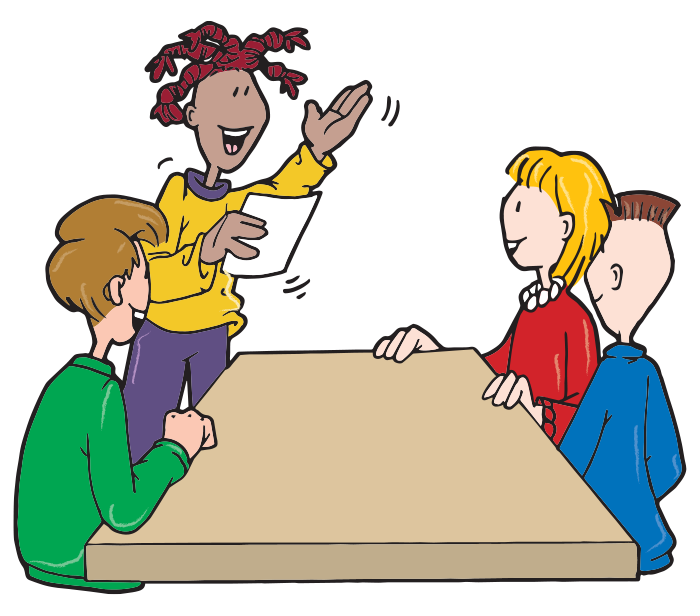
Cooperative Learning Fosters Comfort with Public Speaking. In contrast to this anxiety inducing pattern, cooperative learning fosters comfort with public speaking. Cooperative learning occurs in small cohesive groups. Teambuilding activities create friendships and safe, supportive peer relations. If students pair up in their teams of four and give their oral reports to a supportive teammate, anxiety is low. After giving their report, their partner provides praise and supportive feedback, and the pair discusses ways the report can be improved. The partners then each pair up with a new partner and they give their report again. Having had practice and support as well as a plan to improve their performance, students perform better. What is the student to conclude? With practice, I improve in public speaking. Rather than fostering a fear of public speaking, cooperative learning fosters positive associations with public speaking. Public speaking is a time to receive praise and support and leads students to the conclusion that they improve with repeated practice.
It can be argued that giving a report multiple times to one teammate is a far cry from public speaking in front of the whole class. That is correct. For that reason, in cooperative learning we have additional structures that involve progressively larger audiences. The sequence may look like this:
- Students give their reports to a partner.
- Students receive praise, support, and suggestions for improvement.
- Students each give their improved report to a second partner.
- Students again receive praise, support, and suggestions for improvement.
- Students may give the report a third time, to a new audience of three or more.
- Finally, after practicing and improving their report, students may give the report to the whole class.
It can be argued that while giving the same report repeatedly is good for improvement and desensitization of anxiety, it takes up too much time. In fact, it takes less time than the traditional approach. Let’s do the math:
| Traditional | |
|---|---|
| Each student in a class of 20 gives a 3-minute report | Total Time: 60 minutes |
| Cooperative Learning | |
| First round of pair reports: (3 minutes per partner) | 6 minutes |
| Praise and improvement suggestions from partner (2 minutes per partner) | 4 minutes |
| Second round of pair reports (3 minutes per partner) | 6 minutes |
| Second round of praise and suggestions from partner (2 minutes per partner) | 4 minutes |
| Total Time: 20 minutes |
|
With Cooperative Learning, in a third of the time each student has given their report twice, has received praise and an opportunity to improve. They have experienced public speaking in a supportive, low-anxiety situation, and are likely to conclude that public speaking leads to peer praise and support. This is in contrast to traditional instruction which associates public speaking with anxiety and a high probability of anxiety induced poor performance.
Learned Helplessness
Traditional Instruction Fosters Learned Helplessness
Learned helplessness results from an independence of effort and outcome, fostering a generalized feeling that ‘whatever I do, I cannot improve my outcomes.’ Learned helplessness is reinforced by a number of common instructional strategies. For brevity, let’s explore just one common instructional strategy: solo worksheet work. Teachers instruct students on a new skill and then have them work alone on a worksheet to practice the skill. The worksheet may be given to be completed in class or as homework.
In each class there are high, medium, and low achieving students. Among the low achieving students are some who knew they did not understand the initial teacher’s instructions and others who thought they understood the teacher’s initial instructions but did not. If the worksheet is given as homework, those who know they could not succeed on the worksheet find excuses not to do the worksheet. Those who thought they understood the instructions but did not, practice the worksheet incorrectly, only to be disappointed, expecting a good grade yet failing. If the worksheet is given to be completed in class, those who know they did not understand the initial instructions engage in mind wandering or half-hearted effort, knowing whatever they do they would not succeed. Asking for help from a classmate is viewed as cheating and calling for help from the teacher for many is too embarrassing because it exposes inadequacy to the rest of the class. Further, in a class of students the teacher does not have time to provide quality tutoring to all those who need it. The situation results in students not asking for or not receiving the help needed for success. Failing grades are far too common and many students fall into helplessness.
Cooperative Learning Fosters Learned Effectiveness
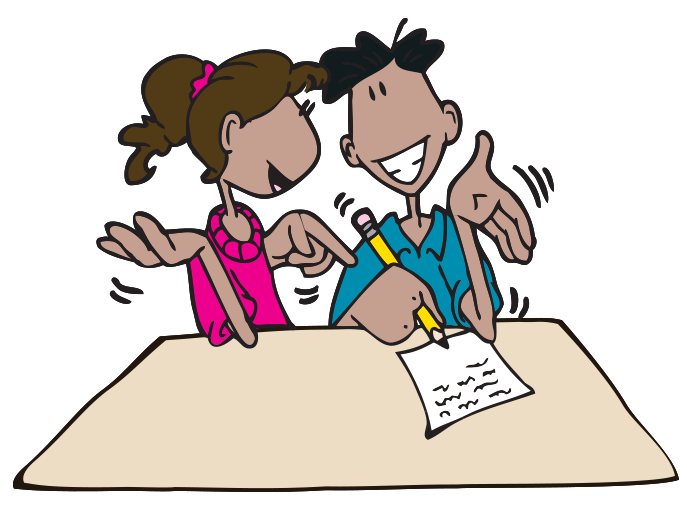
In contrast to the helplessness experienced by many students with traditional solo worksheet work, cooperative learning worksheet work fosters learned effectiveness. Students work with one worksheet per pair, alternating answering the worksheet questions or solving the worksheet problems. Pairs are assigned so they are heterogeneous in ability level, so help is readily available. Thus, if a student asks their teammate for help, that teammate is eager to assist. This structure fosters learned effectiveness because each student understands that with a little effort (asking for help) they can immediately improve their outcomes.
General Resilience
In addition to not fostering and/or providing an antidote to specific mental health and behavioral problems, cooperative learning creates in students a general resilience, preparing them to bounce back from the psychological challenges all growing youth sometimes encounter. Students in cooperative learning classrooms are surrounded by supportive peers and instruction that reliably produces many types of positive outcomes. Repeated experience of success creates an expectation for success encouraging students to try harder when faced with difficulties.
Let’s list the research-based positive outcomes reliably springing from implementation of cooperative learning and then say a word or two about how those create general resilience. A wealth of empirical data, much of which is published in respected peer-reviewed scientific journal articles and books, reveals that cooperative learning results in:
- Increased Cooperative Behaviors
- Increased Engagement
- Accelerated Academic Achievement
- Decreased Achievement Gaps
- Decreased Disruptive Behavior
- Improved Race Relations
- Improved Outcomes for Students with Disabilities
- Enhanced Student Satisfaction
- Increased Student Well-Being
- Decreased Absenteeism
- Increased Employability Skills
- Decreased Bullying and School Violence
Summarizing the empirical studies supporting these outcomes is beyond the scope of this brief article. The empirical support is summarized elsewhere.1 Our focus here is how these various positive outcomes lead to a generalized resilience in students.
One of the most powerful outcomes of cooperative learning is increased cooperative behaviors. In cooperative learning classrooms help replaces put-downs. Students of all ability levels and with the range of disabilities are not just accepted and included; they are celebrated for their uniqueness as individuals. Developing in the context of acceptance and support, students feel secure. They have a generalized sense of wellbeing. And with that sense of security and wellbeing comes the willingness to be oneself, to take risks, and to become all that one can be.
Accelerated achievement is another positive outcome that contributes to self-esteem and positive identity. Empirical studies show failure rates decrease dramatically when cooperative learning replaces traditional instruction. For example, researchers at the State University of New York tested achievement by alternating Traditional Instruction vs. Kagan Cooperative Learning. They found that Kagan Cooperative Learning eliminated failing grades and increased the number of students with very high averages. They reported, no student had a failing average under Numbered Heads Together [the Kagan Cooperative Learning condition], and six pupils had maintained averages above 90%. In contrast, when Call On One was used, six students had failing averages and only one student maintained an average exceeding 90%.2
With increased academic success comes learned effectiveness which enhances motivation and resilience.
The many positive outcomes that spring from implementing cooperative learning are mutually reinforcing, producing a positive context in which students can flourish. For example, enhanced student engagement decreases disruptive behavior. Student academic and social success enhances student satisfaction an increased sense of well-being. Students who are accepted, included, and successful don’t want to disrupt or skip class, reducing both disruptive behaviors and absenteeism.
In sum, cooperative learning decreases the probability of specific mental health problems as well as fostering a general resilience among students, both of which support the goals of mental health professionals.
References
- 1 Kagan, M. Closing the Achievement Gap. Kagan Online Magazine. San Clemente, CA: Kagan Publishing, Spring 2007. https://www.kaganonline.com/free_articles/research_and_rationale/307/Closing-the-Achievement-Gap
- Kagan, S. Brain-Friendly Teaching: Tools, Tips, & Structures. San Clemente, CA: Kagan Publishing, 2014.
- Kagan, S. Emotion-Friendly Teaching: Accelerating Social-Emotional Learning (SEL). San Clemente, CA: Kagan Publishing, 2020.
- Kagan, S. Effect Size Reveals the Impact of Kagan Structures and Cooperative Learning. Kagan Online Magazine. San Clemente, CA: Kagan Publishing, Winter 2014. https://www.kaganonline.com/free_articles/dr_spencer_kagan/384/Effect-Size-Reveals-the-Impact-of-Kagan-Structures-and-Cooperative-Learning
- Kagan, S. The Structural Approach and Kagan Structures. In Davidson, N. (ed.), Chapter 5. Pioneering Perspectives in Cooperative Learning: Theory, Research, and Classroom Practice for Diverse Approaches to CL. New York, NY: Routledge, 2021.
- Kagan, S. Memory-Friendly Teaching. San Clemente, CA: Kagan Publishing, 2026.
- Kagan, S. & M. Kagan. Kagan Cooperative Learning. San Clemente, CA: Kagan Publishing, 2009.
- Kagan, S., G. Zahn, K. Widaman, J. Schwarzwald & G. Tyrrell. Classroom Structural Bias: Impact of Cooperative and Competitive Classroom Structures on Cooperative and Competitive Individuals and Groups. In Slavin, R.S., Sharan, S., Kagan, S., Hertz-Lazarowitz, R., Webb, C., & Schmuck, R. (eds.). Learning to Cooperate, Cooperating to Learn. New York: Plenum, 1985.
- McMillen, C., Mallette, B., Smith, C., Rey, J., Jabot, M. & Maheady, L. The effects of Numbered Heads Together on the science quiz performance of a 9th grade class. Journal of Evidence-Based Practices for Schools, 2016, 15(1), 65–89.
- Winters, M. Earning A Grades with Kagan. San Clemente, CA: Kagan Publishing. https://www.kaganonline.com/free_articles/research_and_rationale/398/Earning-A-Grades-with-Kagan
- 2 Maheady, L., Mallette, B., Harper, G. F. & Sacca, K. Heads Together: A peer-mediated option for improving the academic achievement of heterogeneous learning groups. Remedial and Special Education, 1991, 12(2), 25–33.